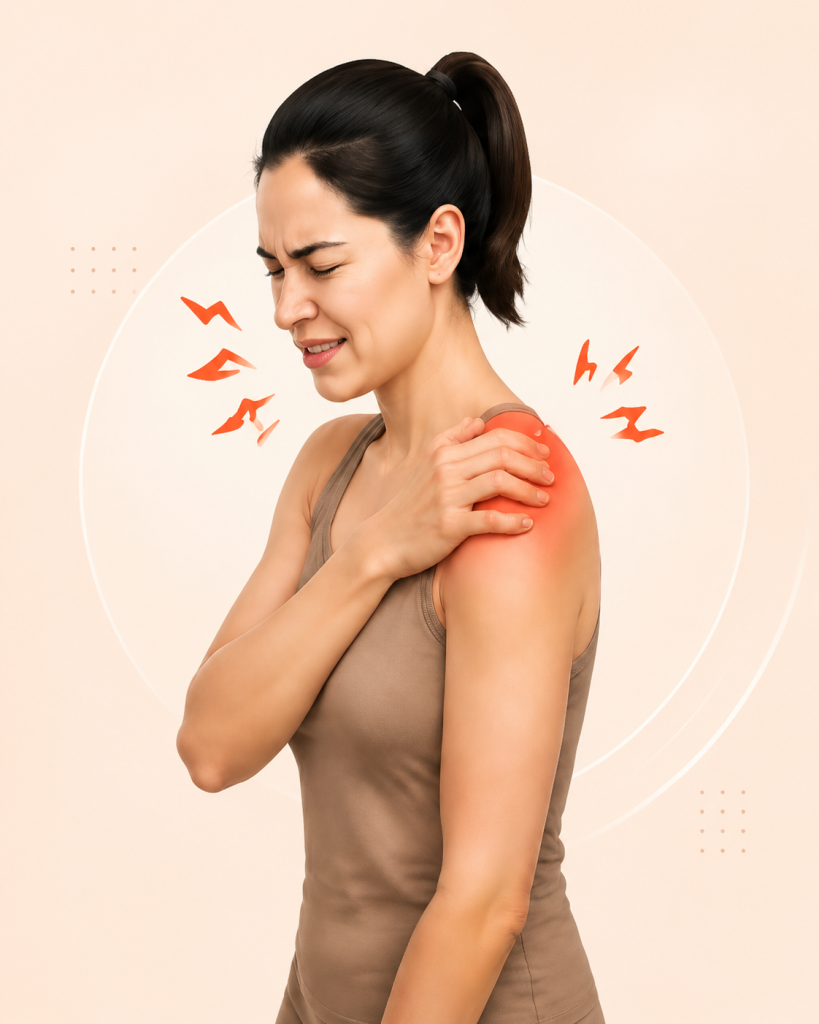
Frozen shoulder, also known as adhesive capsulitis, is a painful condition that causes stiffness and restricted movement in the shoulder joint. Everyday activities such as reaching overhead, dressing, or even sleeping comfortably can become challenging. While surgery is rarely the first line of treatment, many patients wonder whether exercises and physiotherapy can truly help. The answer is yes—in most cases, they play a crucial role in recovery.
What is a Frozen Shoulder?
Frozen shoulder occurs when the capsule surrounding the shoulder joint becomes inflamed and thickened, leading to pain and progressive stiffness. The condition typically develops gradually and progresses through three stages:
Freezing Stage
- Increasing shoulder pain
- Gradual loss of movement
- Difficulty performing daily activities
Frozen Stage
- Pain may reduce slightly
- Significant stiffness remains
- Restricted range of motion
Thawing Stage
- Shoulder mobility slowly improves
- Pain continues to decrease
- Recovery may take several months to years

Frozen shoulder is more common in individuals with diabetes, thyroid disorders, prolonged shoulder immobilization, or previous shoulder injuries.
How Do Exercises and Physiotherapy Help?
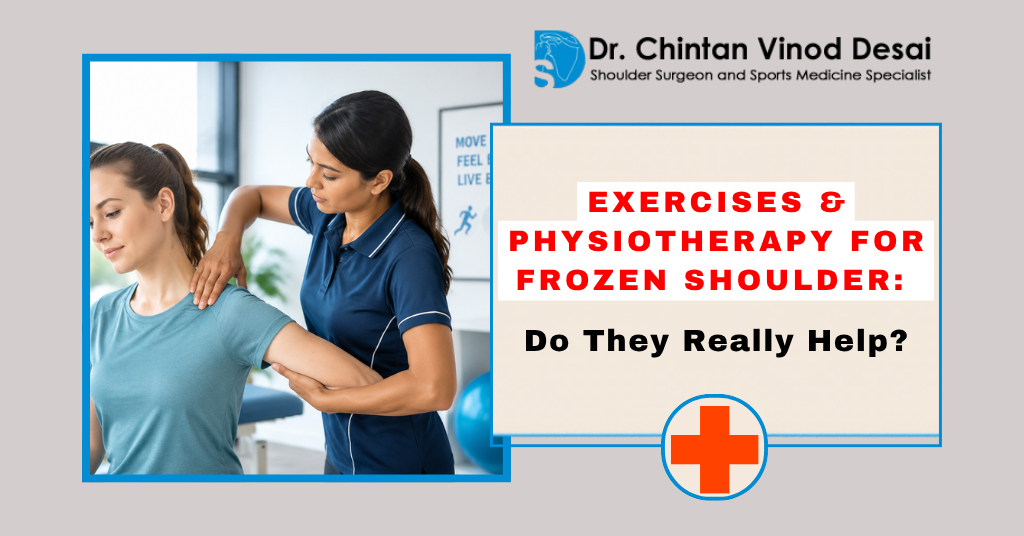
Physiotherapy is considered one of the most effective non-surgical treatments for frozen shoulder. The primary goals are to reduce pain, improve mobility, and restore shoulder function.
Improve Range of Motion
Gentle stretching exercises help loosen the tight shoulder capsule and gradually increase flexibility.
Reduce Pain and Stiffness
Targeted movements and manual therapy techniques can decrease discomfort and improve joint mobility.
Restore Strength
As mobility improves, strengthening exercises help support the shoulder joint and prevent future problems.
Enhance Daily Function
Regular physiotherapy allows patients to regain the ability to perform routine activities with greater ease and comfort.
Common Exercises Recommended for Frozen Shoulder
A physiotherapist may recommend exercises such as:
Pendulum Stretch
A gentle exercise that promotes movement without placing excessive stress on the shoulder.
Towel Stretch
Helps improve flexibility and shoulder mobility.
Finger Walk Exercise
Encourages gradual improvement in shoulder elevation and range of motion.
Cross-Body Stretch
Improves flexibility in the back portion of the shoulder.
External Rotation Stretch
Helps restore rotational movement and reduce stiffness.
These exercises should always be performed under professional guidance to avoid aggravating symptoms.
When Physiotherapy Works Best
Physiotherapy is most effective when:
- Started early in the condition
- Performed consistently
- Customized to the patient’s stage of frozen shoulder
- Combined with pain management strategies when necessary
Most patients experience gradual improvement over time, although recovery can take several months.
When Additional Treatment May Be Needed
While exercises and physiotherapy help many patients, some cases may require additional interventions if symptoms persist.
These may include:
- Anti-inflammatory medications
- Corticosteroid injections
- Hydrodilatation (joint capsule distension)
- Arthroscopic frozen shoulder release surgery in severe cases
An orthopedic specialist can determine the most appropriate treatment plan based on the severity of symptoms and response to conservative care.
Benefits of Physiotherapy for Frozen Shoulder
- Improves shoulder mobility
- Reduces pain and stiffness
- Restores strength and function
- Minimizes the need for surgery
- Supports long-term shoulder health
Conclusion
Exercises and physiotherapy are among the most effective treatments for frozen shoulder and often form the foundation of recovery. With a structured rehabilitation program and expert guidance, many patients can regain shoulder movement, reduce pain, and return to their normal activities without surgery.
If you’re struggling with persistent shoulder stiffness or pain, consulting an experienced orthopedic shoulder specialist can help determine the best treatment approach and ensure a safe, effective recovery.