Shoulder pain can limit your range of motion and hinder your daily activities. Whether you’ve suffered an injury, have chronic shoulder conditions, or are dealing with shoulder arthritis, you may be considering surgical options. Two common treatments for shoulder problems are shoulder replacement surgery and shoulder arthroscopy. Each procedure offers unique benefits depending on the severity and nature of the condition.
Dr. Chintan Desai, a leading shoulder surgeon in Mumbai, explains the differences between these two procedures and helps you determine which one is right for you.
What is Shoulder Replacement Surgery?
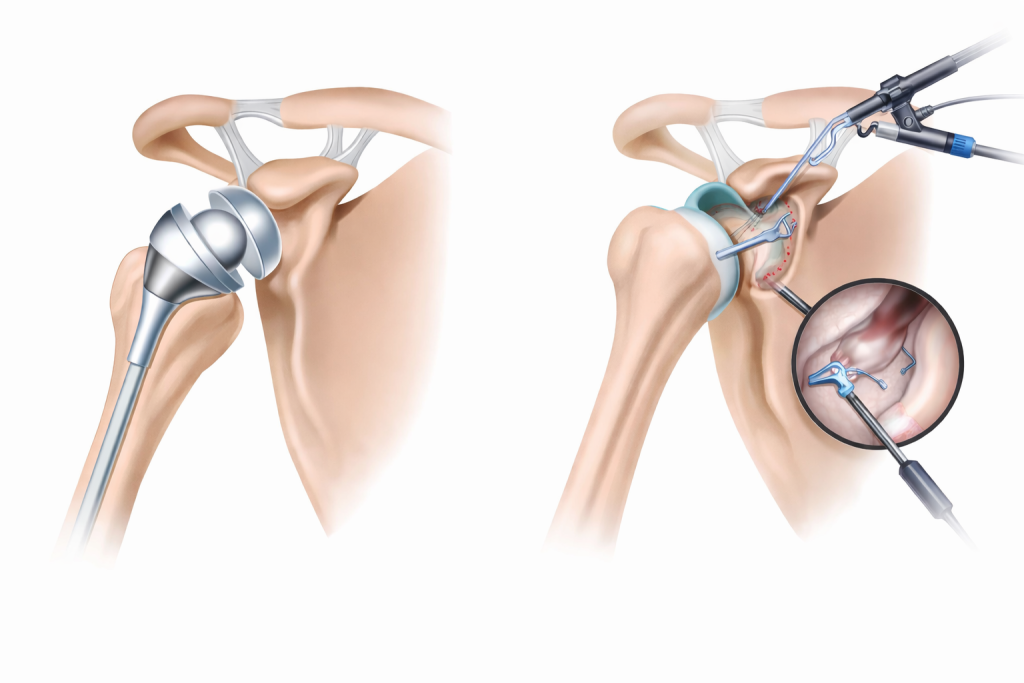
Shoulder replacement, also known as shoulder arthroplasty, involves replacing the damaged or worn-out parts of the shoulder joint with artificial components. It is typically recommended for individuals suffering from severe shoulder arthritis, fractures, or other joint degenerations that have not responded to non-surgical treatments.
How Shoulder Replacement Works:
- The damaged portions of the shoulder joint are removed.
- An artificial ball and socket joint are inserted.
- The procedure helps reduce pain and restore function.
Shoulder replacement surgery is often recommended when:
- You have advanced arthritis that causes pain and stiffness.
- Non-surgical treatments (like physical therapy and medications) haven’t been effective.
- The shoulder joint is severely damaged or deformed.
What is Shoulder Arthroscopy?
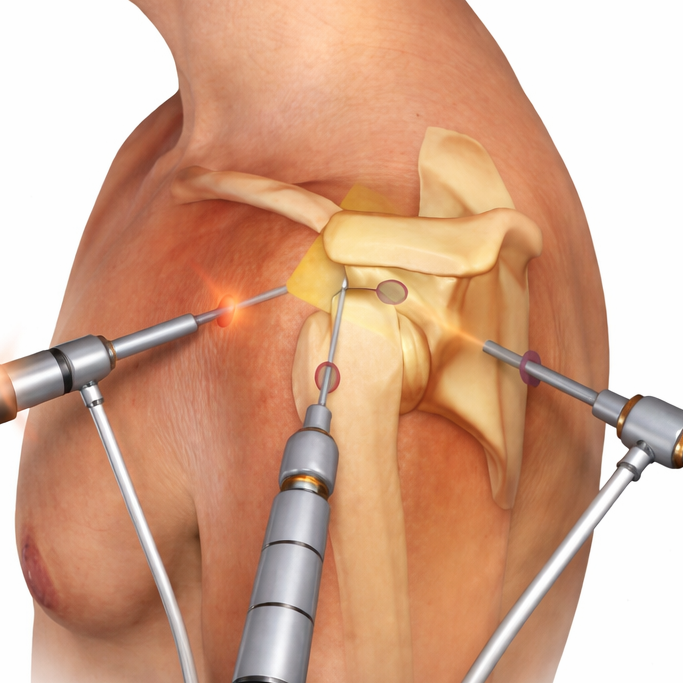
Shoulder arthroscopy, on the other hand, is a minimally invasive procedure that involves using a small camera (arthroscope) and tiny instruments to examine, diagnose, and treat shoulder problems. This technique is generally used for less severe conditions like rotator cuff tears, labral tears, or shoulder impingement.
How Shoulder Arthroscopy Works:
- A small incision is made to insert the arthroscope.
- The surgeon uses the arthroscope to view the inside of the shoulder joint on a monitor.
- Tiny surgical tools are used to repair damaged tissue, such as tendons or cartilage.
Shoulder arthroscopy is commonly used to treat:
- Rotator cuff injuries
- Labral tears
- Shoulder impingement syndrome
- Chronic shoulder pain due to minor injuries or inflammation
Shoulder Replacement vs Arthroscopy: Key Differences
1. Invasiveness
- Shoulder Replacement: Involves removing parts of the shoulder joint and replacing them with prosthetic components. This is a more invasive procedure and requires a longer recovery time.
- Shoulder Arthroscopy: A minimally invasive procedure with small incisions and a quicker recovery time. There’s less damage to surrounding tissues.
2. Recovery Time
- Shoulder Replacement: Recovery typically takes 6-12 weeks, depending on the procedure and patient’s overall health. Full recovery may take up to 6 months or longer.
- Shoulder Arthroscopy: Recovery is faster, usually 4-6 weeks, depending on the complexity of the condition being treated.
3. Pain Relief
- Shoulder Replacement: Effective for patients with severe arthritis or joint degeneration, providing long-term pain relief by replacing the damaged joint.
- Shoulder Arthroscopy: Typically provides pain relief by addressing specific injuries like rotator cuff tears or labral damage, but it may not be suitable for severe arthritis.
4. Duration of Effectiveness
- Shoulder Replacement: A successful shoulder replacement can last 10-15 years or more, but it may require revision surgery later on.
- Shoulder Arthroscopy: The effectiveness depends on the severity of the injury. Arthroscopy can repair small to moderate tears, but it may not be suitable for advanced degeneration.
Which Is Right for You?
Choosing between shoulder replacement and arthroscopy depends on the severity of your shoulder problem, your activity level, and your goals for recovery.
- If you have severe arthritis or extensive joint damage, shoulder replacement may be the best option.
- If you have a rotator cuff tear, labral tear, or other soft tissue injuries, shoulder arthroscopy is often a less invasive and effective solution.
Consult with a qualified shoulder surgeon like Dr. Chintan Desai, who will evaluate your condition, discuss your goals, and recommend the best course of action.
Conclusion
Deciding between shoulder replacement and shoulder arthroscopy depends on the severity of your condition and your treatment goals. If you’re unsure which option is best for you, it’s important to consult a specialist like Dr. Chintan Desai, a shoulder surgeon in Mumbai, who can guide you through the decision-making process.
For more information or to schedule a consultation, visit Desai Shoulder Clinic.