
Shoulder replacement surgery has evolved significantly over the years, offering patients advanced solutions for shoulder arthritis, rotator cuff tears, and other complex shoulder conditions. One of the latest advancements in shoulder surgery is stemless reverse shoulder arthroplasty, a procedure designed to restore function and reduce pain while preserving more of the patient’s natural bone.
Dr. Chintan Desai, a leading shoulder surgeon in Mumbai, explains everything you need to know about stemless reverse shoulder arthroplasty, including its benefits, indications, recovery process, and who is an ideal candidate.
What is Stemless Reverse Shoulder Arthroplasty?
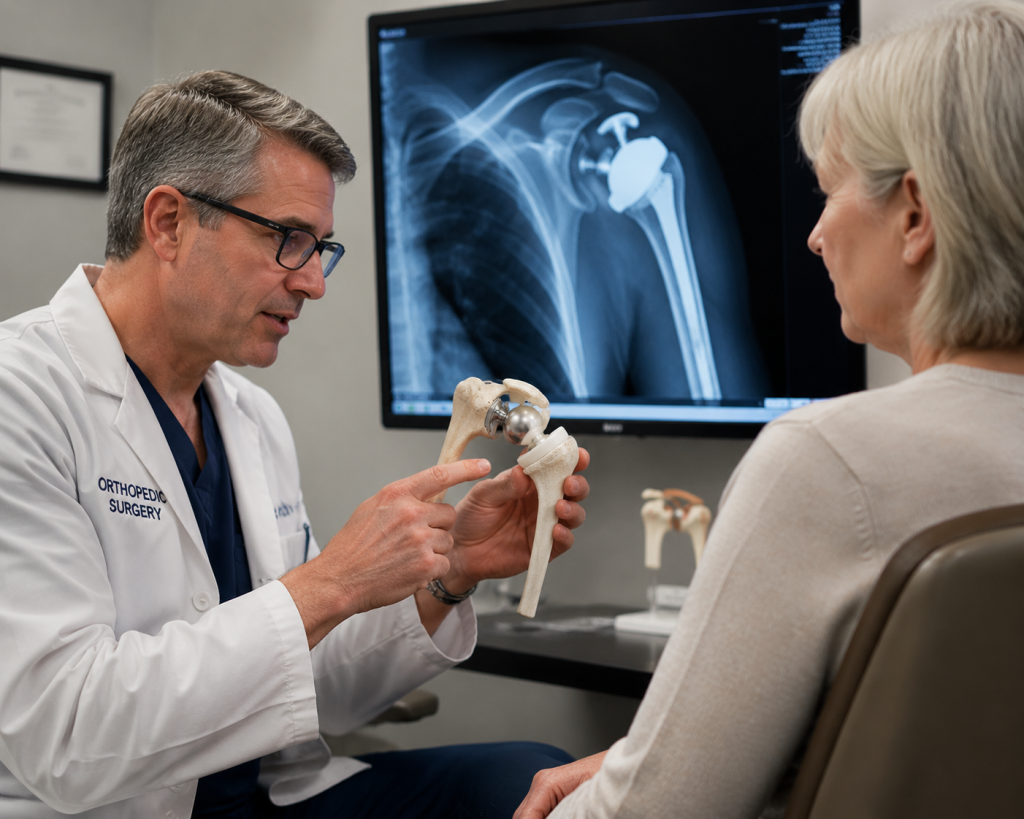
Stemless reverse shoulder arthroplasty is a type of shoulder replacement surgery where the ball and socket configuration of the shoulder joint is reversed. Unlike traditional reverse shoulder replacements that use a long stem implanted into the humerus, the stemless design avoids the humeral canal, preserving more of the patient’s natural bone.
In this procedure:
- The humeral stem is replaced with a stemless implant.
- The shoulder’s anatomy is reversed: the ball is attached to the shoulder blade (scapula), and the socket is placed on the upper arm (humerus).
- The design provides stability, improves range of motion, and reduces complications associated with traditional stemmed implants.
Indications for Stemless Reverse Shoulder Arthroplasty
This procedure is particularly suitable for patients with:
- Severe shoulder arthritis: When the cartilage is worn out, causing pain and limited mobility.
- Rotator cuff arthropathy: When rotator cuff damage leads to joint degeneration.
- Failed previous shoulder replacement: Patients who need a revision surgery may benefit from a stemless option.
- Younger patients or good bone quality: Since the procedure preserves bone, it is ideal for patients with strong humeral bone stock.
Benefits of Stemless Reverse Shoulder Arthroplasty
Stemless reverse shoulder replacement offers several advantages over traditional stemmed implants:
- Bone Preservation: Avoids inserting a long stem into the humerus, preserving natural bone for future procedures if needed.
- Reduced Complications: Lower risk of complications like stem loosening, stress shielding, or humeral fractures.
- Faster Recovery: Many patients experience quicker post-operative recovery due to less bone disruption.
- Improved Range of Motion: Reverse design restores shoulder stability and allows patients to regain mobility.
- Ideal for Younger Patients: Preserving bone is particularly beneficial for younger or active patients who may require revision surgery later.
The Procedure
Stemless reverse shoulder arthroplasty is performed under general anesthesia and involves the following steps:
- Incision: The surgeon makes an incision to access the shoulder joint.
- Joint Preparation: The damaged humeral head and glenoid are removed.
- Implant Placement: The glenosphere (ball) is attached to the scapula, and the humeral socket is implanted using the stemless design.
- Soft Tissue Repair: Muscles and tendons are repaired around the implant to ensure stability.
- Closure: The incision is closed, and the shoulder is immobilized in a sling.
The surgery typically takes 1.5 to 2.5 hours, depending on the complexity of the case.
Recovery and Rehabilitation
Recovery after stemless reverse shoulder arthroplasty involves a combination of rest, pain management, and structured physical therapy:
- Immediate Post-Op: The shoulder is usually immobilized in a sling for the first 2-4 weeks to allow healing.
- Early Rehabilitation: Gentle range-of-motion exercises begin under the guidance of a physical therapist to prevent stiffness.
- Strengthening Exercises: Gradually introduced around 6-8 weeks post-surgery to rebuild muscle strength and shoulder stability.
- Return to Activities: Most patients can resume daily activities within 3 months. Full recovery, including higher-level activities or sports, typically takes 6-9 months.
Adhering to the rehabilitation plan is critical for achieving optimal outcomes.
Risks and Considerations
While stemless reverse shoulder arthroplasty is generally safe, some risks include:
- Infection at the surgical site
- Nerve or blood vessel injury
- Shoulder stiffness or limited range of motion
- Implant loosening (rare)
- Complications related to anesthesia
Patients should discuss these risks with their surgeon to make an informed decision.
Who is an Ideal Candidate?
The ideal candidates for stemless reverse shoulder arthroplasty include:
- Patients with good bone quality in the humerus
- Those suffering from rotator cuff arthropathy or advanced shoulder arthritis
- Patients seeking faster recovery and less invasive surgery
- Younger or active individuals who may need future shoulder revision surgery
Not all patients are suitable for this procedure, and Dr. Chintan Desai, a shoulder surgeon in Mumbai, can determine whether this advanced technique is appropriate for your condition.
Conclusion
Stemless reverse shoulder arthroplasty represents a modern, bone-preserving alternative to traditional shoulder replacement surgery. It provides pain relief, restores mobility, and allows patients—especially athletes or active individuals—to regain shoulder function more safely.
If you’re experiencing chronic shoulder pain, rotator cuff arthropathy, or severe arthritis, consult Dr. Chintan Desai to determine if stemless reverse shoulder arthroplasty is the right solution for you.