Shoulder pain is a common problem affecting people of all ages, from athletes and gym-goers to working professionals and older adults. While some shoulder problems improve with exercises and rehabilitation, others may require detailed evaluation and medical treatment.
Many people are unsure whether they should directly consult a shoulder specialist or begin treatment with a physiotherapist. Choosing the right healthcare professional at the right time can help prevent worsening of the condition and ensure faster recovery.
The shoulder is a complex joint involving muscles, tendons, ligaments, and cartilage. Conditions like rotator cuff injuries, shoulder impingement, labral tears, frozen shoulder, and instability may require different approaches depending on the cause and severity.
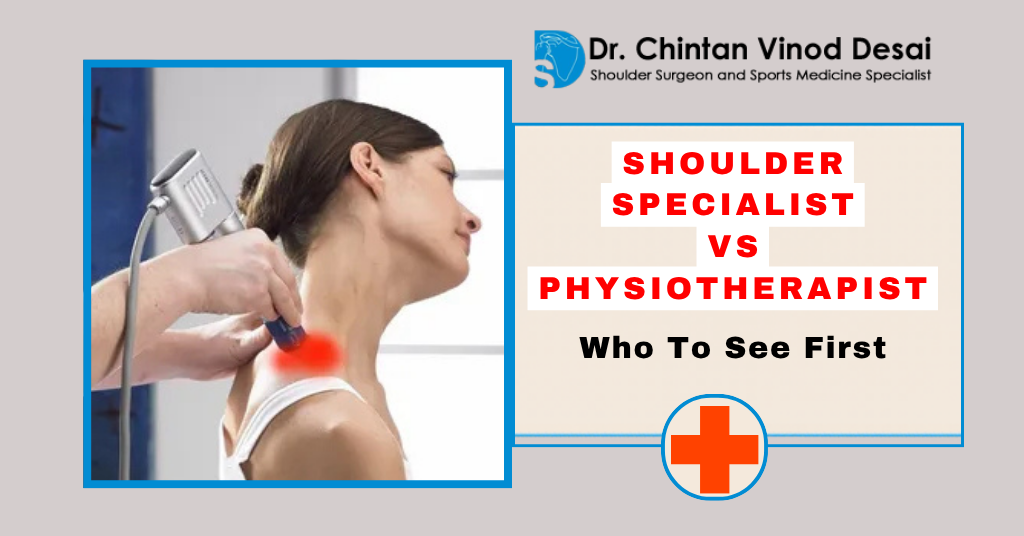
Dr. Chintan Desai, a leading shoulder specialist in Mumbai, explains the difference between shoulder specialists and physiotherapists, when to consult each, and how the right treatment approach can help restore shoulder function.
Understanding the Difference Between a Shoulder Specialist and Physiotherapist
Both shoulder specialists and physiotherapists play important roles in shoulder care, but their responsibilities are different.
👨⚕️ Who Is a Shoulder Specialist?
A shoulder specialist is an orthopaedic surgeon with advanced expertise in diagnosing and treating shoulder conditions.
A shoulder specialist can:
✔️ Diagnose complex shoulder problems
✔️ Perform detailed physical examination
✔️ Order imaging tests like MRI and X-rays
✔️ Provide non-surgical treatment plans
✔️ Perform shoulder surgeries when required
They treat conditions involving:
- Tendon tears
- Ligament injuries
- Shoulder instability
- Sports injuries
- Joint damage
🏃 Who Is a Physiotherapist?
A physiotherapist focuses on improving movement, strength, flexibility, and function through rehabilitation.
Physiotherapy helps with:
✔️ Reducing pain
✔️ Improving shoulder mobility
✔️ Strengthening muscles
✔️ Correcting movement patterns
✔️ Preventing future injuries
Physiotherapists commonly treat:
- Muscle stiffness
- Mild strains
- Post-surgery rehabilitation
- Weakness
- Movement limitations
When Should You See a Shoulder Specialist First?
Certain shoulder symptoms require expert evaluation before starting physiotherapy.
1. Severe or Persistent Shoulder Pain
Consult a shoulder specialist if:
⚠️ Pain continues for several weeks
⚠️ Pain is worsening over time
⚠️ Pain affects sleep
⚠️ Pain limits daily activities
Persistent pain may indicate an underlying structural problem that needs proper diagnosis.
2. Sudden Shoulder Injury or Trauma
A shoulder specialist should evaluate injuries caused by:
- Falls
- Sports injuries
- Heavy lifting accidents
- Sudden pulling movements
These injuries may involve:
✔️ Rotator cuff tears
✔️ Labral injuries
✔️ Ligament damage
✔️ Shoulder dislocation
Early diagnosis can prevent further damage.
3. Shoulder Weakness
Weakness is different from pain-related discomfort.
Seek specialist advice if you experience:
✔️ Difficulty lifting your arm
✔️ Sudden loss of strength
✔️ Weakness while exercising
✔️ Trouble performing routine activities
Muscle weakness may suggest tendon or nerve-related problems.
4. Repeated Shoulder Dislocations or Instability
Shoulder instability occurs when the joint does not remain stable.
Warning signs include:
⚠️ Shoulder feeling like it may slip out
⚠️ Repeated dislocations
⚠️ Fear during certain movements
⚠️ Reduced confidence while using the arm
These conditions may require advanced treatment or stabilization surgery.
5. Clicking, Locking, or Catching Sensation With Pain
Shoulder sounds are not always serious, but clicking associated with pain may indicate:
- Labral tears
- Cartilage problems
- Tendon injuries
- Shoulder instability
A shoulder specialist can determine the exact cause.
When Is Physiotherapy the Right First Step?
Physiotherapy is highly effective for many shoulder conditions, especially when there is no major structural damage.
You may benefit from physiotherapy for:
1. Mild Shoulder Pain
Physiotherapy can help improve:
✔️ Shoulder flexibility
✔️ Muscle strength
✔️ Joint movement
2. Muscle Strains
Mild muscle injuries often improve with:
- Rest
- Stretching exercises
- Strengthening programs
- Rehabilitation
3. Posture-Related Shoulder Pain
Poor posture can contribute to shoulder discomfort.
Physiotherapy helps correct:
✔️ Shoulder positioning
✔️ Muscle imbalance
✔️ Movement patterns
4. Recovery After Shoulder Surgery
Physiotherapy is an important part of recovery after procedures like:
- Rotator cuff repair
- Labral repair
- Shoulder stabilization surgery
It helps restore:
✔️ Strength
✔️ Mobility
✔️ Function
Common Shoulder Conditions and Who Should You Consult?
| Shoulder Problem | First Consultation |
| Mild muscle strain | Physiotherapist |
| Shoulder stiffness | Physiotherapist / Shoulder Specialist |
| Persistent shoulder pain | Shoulder Specialist |
| Rotator cuff tear | Shoulder Specialist |
| Shoulder dislocation | Shoulder Specialist |
| Labral tear | Shoulder Specialist |
| Post-surgery recovery | Physiotherapist |
| Sports-related injury | Shoulder Specialist |
Why Diagnosis Should Come Before Physiotherapy
Starting exercises without knowing the exact cause of shoulder pain may sometimes worsen the condition.
For example:
- A minor strain may improve with exercises
- A rotator cuff tear may require specific treatment
- Shoulder instability may worsen with incorrect exercises
A proper diagnosis helps create the right treatment plan.
How Does a Shoulder Specialist Diagnose the Problem?
Dr. Chintan Desai evaluates shoulder conditions through:
Physical Examination
Assessment includes:
✔️ Shoulder movement
✔️ Muscle strength
✔️ Joint stability
✔️ Pain patterns
Imaging Tests
X-Ray
Helps identify:
- Bone abnormalities
- Arthritis changes
- Joint problems
MRI Scan
Provides detailed images of:
- Rotator cuff tendons
- Labrum
- Ligaments
- Soft tissues
Ultrasound
Helps evaluate tendon-related conditions.
Treatment Approach for Shoulder Problems
Treatment depends on:
✔️ Type of injury
✔️ Severity of damage
✔️ Patient age and activity level
✔️ Treatment goals
Non-Surgical Treatment
May include:
- Physiotherapy
- Activity modification
- Medication
- Injections in selected cases
Surgical Treatment
Surgery may be required when:
⚠️ There is a major tendon tear
⚠️ Pain continues despite treatment
⚠️ Shoulder instability affects daily life
⚠️ Structural damage needs repair
Common procedures include:
Shoulder Arthroscopy
Used for:
✔️ Rotator cuff repair
✔️ Labral repair
✔️ Shoulder stabilization
Benefits include:
✅ Smaller incisions
✅ Less tissue damage
✅ Faster recovery
Can a Physiotherapist Diagnose Shoulder Tears?
Physiotherapists can identify movement problems and help with rehabilitation, but structural injuries such as tendon tears or labral injuries usually require evaluation by a shoulder specialist with imaging support.
A combined approach between a shoulder specialist and physiotherapist often provides the best outcomes.
Prevention Tips to Maintain Shoulder Health
Protect your shoulders by:
Use Proper Exercise Technique
✔️ Avoid lifting excessive weights
✔️ Maintain correct posture
✔️ Perform controlled movements
Strengthen Shoulder Muscles
Focus on:
✔️ Rotator cuff strength
✔️ Shoulder stability
✔️ Upper back muscles
Do Not Ignore Pain
Early assessment can prevent minor issues from becoming major problems.
When Should You Consult Dr. Chintan Desai?
Consult a shoulder specialist if you have:
⚠️ Persistent shoulder pain
⚠️ Weakness while lifting
⚠️ Shoulder instability
⚠️ Sports-related injuries
⚠️ Failed improvement with physiotherapy
⚠️ Difficulty performing daily activities
Why Choose Dr. Chintan Desai for Shoulder Problems?
Dr. Chintan Desai is an experienced shoulder surgeon in Mumbai specializing in diagnosis and treatment of various shoulder conditions.
His expertise includes:
✔️ Shoulder arthroscopy
✔️ Rotator cuff repair
✔️ Labral tear treatment
✔️ Shoulder instability surgery
✔️ Sports-related shoulder injuries
✔️ Shoulder rehabilitation
With advanced techniques and a patient-focused approach, he helps patients achieve better shoulder function and return to active lifestyles.
Conclusion
Choosing between a shoulder specialist and physiotherapist depends on the cause and severity of your shoulder problem. While physiotherapy is effective for many mild conditions and rehabilitation, certain injuries require specialist evaluation first.
Persistent pain, weakness, instability, or injuries caused by trauma should not be ignored.
Consult Dr. Chintan Desai for expert shoulder evaluation and personalized treatment guidance to restore pain-free movement.