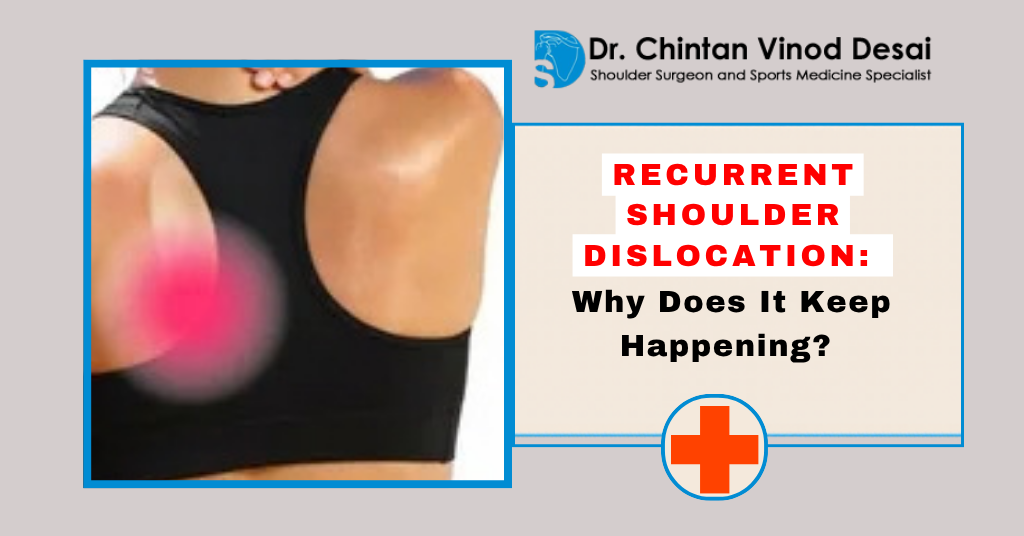
A shoulder dislocation can be a painful and frightening experience. While some people recover completely after the first episode, others continue to experience repeated episodes where the shoulder joint slips out of place. This condition is known as recurrent shoulder dislocation or chronic shoulder instability.
The shoulder is the most mobile joint in the human body, allowing a wide range of movements. However, this mobility also makes it more vulnerable to instability, especially after an injury.
Dr. Chintan Desai, an experienced shoulder surgeon in Mumbai, explains why recurrent shoulder dislocation happens, what causes it, and how modern treatments can help restore shoulder stability and function.

What is Recurrent Shoulder Dislocation?
Recurrent shoulder dislocation occurs when the shoulder joint repeatedly comes out of its normal position after an initial dislocation.
The shoulder joint is a ball-and-socket joint where the upper arm bone (humeral head) fits into a shallow socket (glenoid). Its stability depends on:
- Labrum (cartilage rim around the socket)
- Ligaments
- Rotator cuff muscles
- Surrounding muscles and tendons
When these structures are damaged during the first dislocation, the shoulder may become unstable and prone to repeated dislocations.
Why Does Shoulder Dislocation Keep Happening?

Several factors can contribute to recurrent shoulder instability:
1. Damage to the Labrum (Bankart Lesion)
During a shoulder dislocation, the labrum can tear from the edge of the socket. This injury is commonly known as a Bankart lesion.
The torn labrum reduces the stability of the shoulder joint, making it easier for the shoulder to dislocate again, especially during activities involving:
- Throwing movements
- Overhead activities
- Sports participation
- Arm rotation
2. Bone Loss Around the Shoulder Joint
Repeated dislocations can gradually damage the bones of the shoulder.
Bone loss may occur from:
- The glenoid socket
- The humeral head (Hill-Sachs lesion)
When significant bone loss develops, soft tissue repair alone may not provide enough stability, and additional surgical procedures may be required.
3. Ligament and Capsule Stretching
The shoulder joint is supported by a capsule and ligaments that help maintain stability.
After a dislocation, these tissues may become:
- Stretched
- Loose
- Weakened
This increased laxity allows the shoulder to move excessively and increases the risk of future dislocations.
4. Age at First Dislocation
Age plays an important role in recurrence.
Younger individuals, especially those involved in contact sports or high-demand activities, have a higher chance of experiencing repeated shoulder instability after the first dislocation.
5. Sports and High-Risk Activities
Activities involving repetitive overhead movements or physical contact can increase the risk of recurrence.
Common examples include:
- Cricket
- Football
- Wrestling
- Swimming
- Weight training
- Throwing sports
Symptoms of Recurrent Shoulder Dislocation
Patients with shoulder instability may experience:
- Shoulder repeatedly slipping out of place
- Feeling that the shoulder is loose or unstable
- Pain during certain movements
- Difficulty lifting the arm overhead
- A sensation of the shoulder “giving way”
- Reduced confidence while playing sports or performing activities
Some patients may also experience frequent episodes where the shoulder partially slips out, known as subluxation.
How is Recurrent Shoulder Dislocation Diagnosed?
A shoulder specialist evaluates recurrent instability through a combination of:
Medical History and Physical Examination
Your doctor may assess:
- Previous dislocation episodes
- Age at first dislocation
- Type of injury
- Shoulder movements causing instability
- Sports and activity levels
Imaging Tests
Depending on your condition, your doctor may recommend:
X-ray
Helps identify:
- Bone injuries
- Shoulder alignment
- Fractures
MRI Scan
Helps evaluate:
- Labral tears
- Ligament injuries
- Rotator cuff condition
CT Scan
Useful for assessing:
- Bone loss
- Glenoid defects
- Humeral head defects
Treatment Options for Recurrent Shoulder Dislocation
Treatment depends on factors such as:
- Number of dislocation episodes
- Patient age
- Activity level
- Bone damage
- Soft tissue injuries
Non-Surgical Treatment
For some patients, especially those with minimal instability, treatment may include:
- Physical therapy
- Shoulder strengthening exercises
- Rotator cuff strengthening
- Activity modification
- Avoiding high-risk movements
Physiotherapy focuses on improving muscle control and shoulder stability.
Surgical Treatment for Recurrent Shoulder Instability
When repeated dislocations occur or structural damage is present, surgery may be recommended.
1. Arthroscopic Bankart Repair
This is a minimally invasive procedure where the torn labrum and ligaments are repaired using small incisions.
Benefits include:
- Restoring shoulder stability
- Less tissue damage
- Faster recovery compared to open surgery
2. Remplissage Procedure
For patients with certain bone defects, a remplissage procedure may be performed along with Bankart repair.
It helps prevent the damaged area of the humeral head from engaging with the shoulder socket.
3. Latarjet Procedure
When there is significant bone loss, the Latarjet procedure may be recommended.
This involves transferring a small piece of bone to the front of the shoulder socket to improve stability.
It is commonly considered for:
- Significant glenoid bone loss
- High-risk athletes
- Failed previous stabilization surgery
Recovery After Shoulder Stabilization Surgery
Recovery depends on the type of surgery performed.
Generally:
Initial Phase
- Shoulder protection with a sling
- Pain management
- Gentle movements as advised
Rehabilitation Phase
- Physiotherapy begins gradually
- Range of motion exercises are introduced
- Shoulder strengthening is progressed
Return to Activities
Most patients gradually return to normal activities over several months, depending on healing, strength, and the type of procedure performed.
When Should You See a Shoulder Specialist?
You should consider consultation if:
- Your shoulder has dislocated more than once
- You feel repeated instability
- Your shoulder slips during normal activities
- You avoid sports due to fear of dislocation
- Previous treatment has not prevented recurrence
Early evaluation can help prevent further joint damage and improve long-term shoulder function.
Which Treatment is Right for You?
The right treatment for recurrent shoulder dislocation depends on the cause of instability.
- Patients with soft tissue injuries may benefit from arthroscopic stabilization.
- Patients with significant bone loss may require procedures designed to restore bone stability.
- Patients with repeated dislocations need a detailed evaluation to identify the underlying problem.
Dr. Chintan Desai, a trusted shoulder surgeon in Mumbai, uses clinical evaluation and advanced imaging to create a personalized treatment plan based on each patient’s shoulder condition, lifestyle, and goals.
Conclusion
Recurrent shoulder dislocation is not just a repeated injury; it often indicates underlying damage to the structures that stabilize the shoulder joint. Without proper evaluation, repeated dislocations can lead to increasing instability and joint damage.
With accurate diagnosis and appropriate treatment, many patients can regain shoulder stability, return to daily activities, and resume sports with confidence.
For expert evaluation and personalized treatment options, consult Dr. Chintan Desai at Desai Shoulder Clinic for advanced care of shoulder instability and recurrent dislocation.