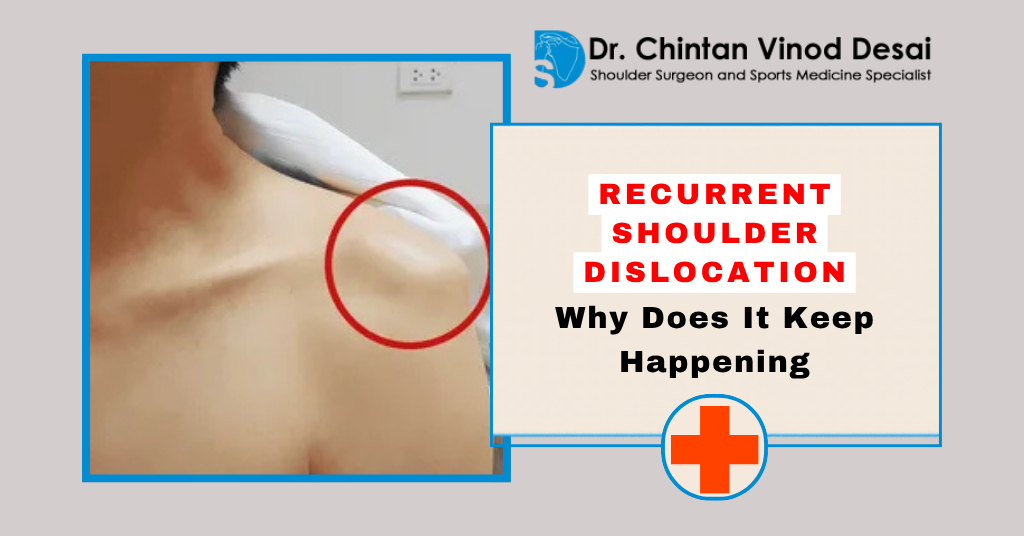
Recurrent shoulder dislocation is a frustrating and painful condition where the shoulder repeatedly slips out of its socket after an initial injury. It can significantly affect daily activities, sports performance, and overall quality of life. Understanding why it keeps happening is the first step toward effective treatment and long-term stability.
Dr. Chintan Desai, a leading shoulder surgeon in Mumbai, explains everything you need to know about recurrent shoulder dislocation — its causes, symptoms, treatment options, and prevention strategies.
What is Recurrent Shoulder Dislocation?
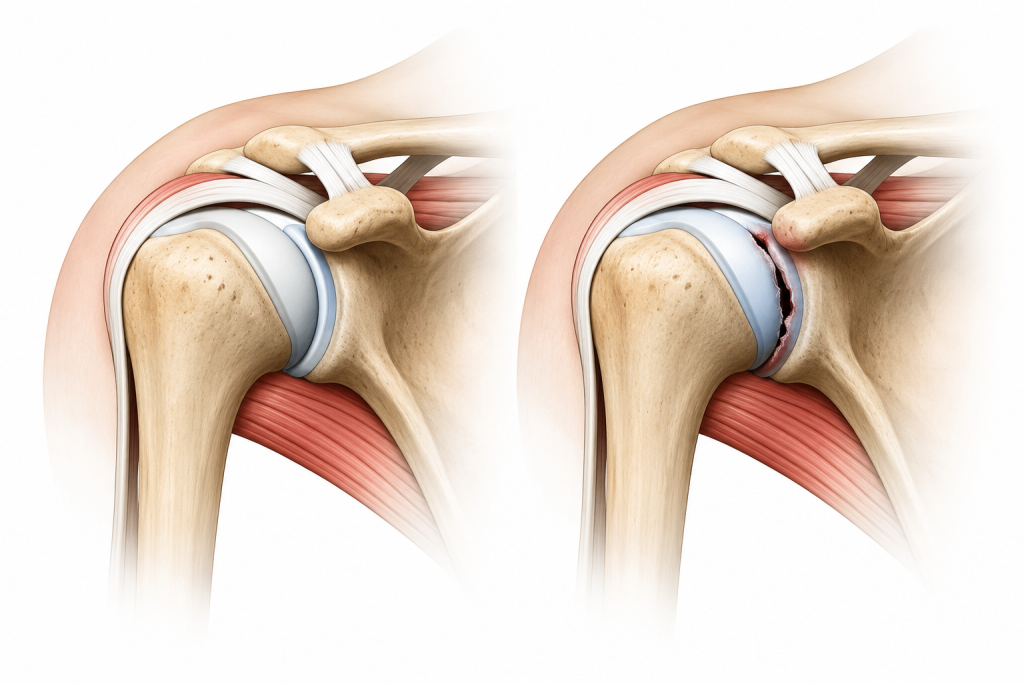
Recurrent shoulder dislocation occurs when the shoulder joint repeatedly comes out of its normal position after an initial dislocation injury. This usually happens due to damage to the stabilizing structures of the shoulder, such as:
- Labrum (cartilage rim)
- Ligaments
- Joint capsule
Once these structures are weakened, the shoulder becomes unstable and prone to repeated dislocations.
Why Does Shoulder Dislocation Keep Happening?
There are several reasons why shoulder dislocation becomes recurrent:
1. Bankart Lesion (Labral Tear)
A tear in the labrum after the first dislocation is one of the most common causes of recurrence. It reduces joint stability.
2. Bone Loss in the Shoulder Joint
Repeated dislocations can lead to bone loss in the socket (glenoid) or humeral head, making instability worse.
3. Weak Ligaments and Capsule
If the shoulder ligaments do not heal properly after the first injury, the joint remains loose.
4. High-Risk Activities or Sports
Athletes involved in:
- Cricket
- Football
- Wrestling
- Overhead sports
are more prone to repeated dislocations.
5. Inadequate Rehabilitation
Stopping physiotherapy too early can prevent full recovery of shoulder strength and stability.
Symptoms of Recurrent Shoulder Dislocation
Patients often experience:
- Shoulder popping out repeatedly
- Pain during movement
- Weakness in the arm
- Fear of lifting the arm overhead
- Feeling of instability or “looseness”
When Should You See a Doctor?
You should consult a shoulder specialist like Dr. Chintan Desai if:
- Your shoulder has dislocated more than once
- You feel instability during daily activities
- Pain persists after initial treatment
- You are unable to return to sports or work
Early treatment helps prevent long-term joint damage.
Diagnosis of Shoulder Instability
Your doctor may recommend:
- Physical examination
- X-rays
- MRI scan (to check labral tears and soft tissue damage)
- CT scan (to evaluate bone loss)
These tests help determine the severity of instability and guide treatment.
Treatment Options for Recurrent Shoulder Dislocation
1. Non-Surgical Treatment
Recommended in mild cases:
- Physiotherapy
- Shoulder strengthening exercises
- Activity modification
- Bracing in some cases
However, recurrence is common if structural damage is significant.
2. Arthroscopic Shoulder Stabilization Surgery
This is the most common treatment for recurrent dislocation.
It includes:
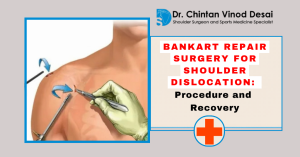
- Repair of torn labrum (Bankart repair)
- Tightening of ligaments
- Removal of loose tissue
Advantages:
- Minimally invasive
- Faster recovery
- High success rate
3. Bone Reconstruction Surgery (Latarjet Procedure)
Recommended in severe cases with bone loss.
It involves transferring a small piece of bone to stabilize the shoulder joint.
Recovery After Surgery
Recovery depends on the procedure:
- Sling support for 3–4 weeks
- Physiotherapy starts gradually
- Return to sports: 3–6 months (varies)
- Full recovery: 4–8 months
Can Recurrent Shoulder Dislocation Be Prevented?
Yes, prevention includes:
- Completing full physiotherapy program
- Strengthening shoulder muscles regularly
- Avoiding risky movements after injury
- Early surgical consultation in high-risk cases
Conclusion
Recurrent shoulder dislocation is usually a result of structural damage that does not heal properly after the first injury. Without proper treatment, the condition can worsen over time and affect daily life.
With expert care from specialists like Dr. Chintan Desai, patients can achieve long-term shoulder stability through advanced arthroscopic and reconstructive procedures.
Early diagnosis and proper treatment are key to preventing repeated dislocations and restoring normal shoulder function.