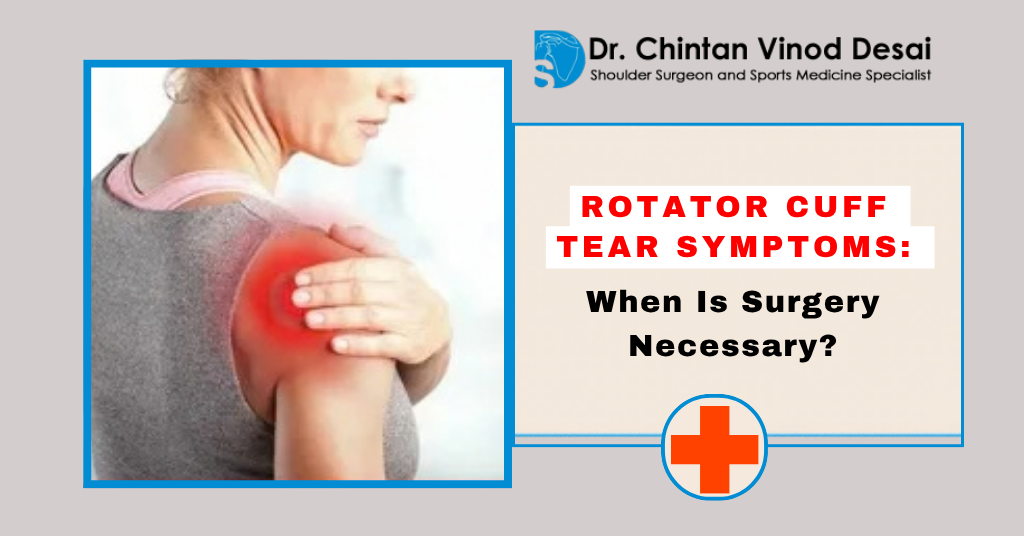
Have you started avoiding simple movements because your shoulder hurts? A task as easy as wearing a jacket, reaching for a coffee mug, or lifting your arm to comb your hair can become painful when a rotator cuff tear affects your shoulder function.
A rotator cuff tear can range from a small tendon injury to a complete tear that limits arm movement. While many people improve with physiotherapy and non-surgical treatments, some tears require surgical repair.
Understanding the symptoms, treatment options, and right time for surgery can help you protect your shoulder and return to daily activities.
What Is a Rotator Cuff Tear?
Your shoulder depends on a group of four muscles and tendons called the rotator cuff. These structures keep the shoulder joint stable and help you lift, rotate, and control your arm movements.
The four rotator cuff muscles are known as the SITS muscles:

- Supraspinatus: Helps lift your arm away from your body
- Infraspinatus: Helps with outward rotation of the shoulder
- Teres Minor: Supports external shoulder rotation
- Subscapularis: Helps rotate the arm inward
A rotator cuff tear occurs when one or more of these tendons become damaged or separate from the bone.
The injury can happen due to:
- A sudden fall or accident
- Sports-related shoulder injuries
- Repeated overhead movements
- Age-related tendon weakening
Some tears develop slowly over time, while others happen suddenly after an injury.
What Are the Common Symptoms of a Rotator Cuff Tear?
Many people ignore early shoulder symptoms, thinking they are temporary soreness. The difference is that rotator cuff problems often affect strength and movement, not just comfort.
| Normal Shoulder Soreness | Rotator Cuff Tear Symptoms |
| Improves with rest | Pain continues despite rest |
| Mild discomfort after activity | Pain while lifting or rotating the arm |
| Strength remains normal | Noticeable weakness in the shoulder |
| Does not disturb sleep | Pain may worsen while sleeping |
| Movement remains normal | Difficulty reaching overhead or behind the back |
Common symptoms include:
Shoulder Pain
You may experience a deep ache inside the shoulder. Pain often increases when you:
- Lift your arm above shoulder level
- Reach behind your back
- Sleep on the affected side
- Perform repetitive movements
Shoulder Weakness
Weakness is one of the important signs of a rotator cuff injury.
You may struggle with activities such as:
- Lifting a bag
- Throwing a ball
- Opening a heavy door
- Placing objects on a shelf
Reduced Range of Motion
A rotator cuff tear can make your shoulder feel stiff. You may find it difficult to move your arm in certain directions, even if you try to push through the discomfort.
Clicking or Catching Sensation
Some people notice clicking sounds or a catching feeling during shoulder movement. When these symptoms occur with pain and weakness, an orthopedic evaluation is recommended.
When Can a Rotator Cuff Tear Improve Without Surgery?
Not every rotator cuff tear needs an operation.
Doctors often begin with non-surgical treatment when:
- The tear is small or partial
- Pain is manageable
- Shoulder strength is preserved
- Symptoms are improving gradually
A structured physiotherapy program usually continues for around 6 to 12 weeks before doctors assess progress.
Treatment may include:
Physiotherapy
A targeted exercise program helps:
- Improve shoulder movement
- Strengthen surrounding muscles
- Reduce strain on the injured tendon
A physiotherapist designs exercises based on your shoulder condition rather than using a one-size-fits-all approach.
Medication and Activity Changes
Pain-relieving medicines may help control symptoms. Avoiding movements that worsen pain can give the shoulder time to recover.
Injections
In selected cases, doctors may recommend injections to reduce inflammation and improve comfort during rehabilitation.
The goal is not only to reduce pain but also to restore shoulder function.
When Is Surgery Necessary for a Rotator Cuff Tear?
Surgeons typically recommend surgery when the tear affects your quality of life or does not improve with appropriate treatment.
Surgery may be required in these situations:
1. Persistent Pain After Non-Surgical Treatment
If you continue to experience pain after 6 to 12 weeks of physiotherapy and other treatments, your doctor may discuss surgical options.
Pain that affects your sleep, work, or daily activities needs proper evaluation.
2. Large or Complete Tendon Tears
A complete tear means the tendon has separated from the bone. Larger tears have a higher chance of causing ongoing weakness and movement problems.
3. Sudden Loss of Shoulder Function After Injury
If you fall and suddenly cannot lift your arm, it may indicate an acute rotator cuff tear. Early assessment helps determine whether repair is needed.
4. Active Lifestyle Requirements
Athletes, physically active individuals, or people with demanding jobs may benefit from surgery when the tear prevents them from returning to their normal activities.
How Is Rotator Cuff Surgery Performed?
Rotator cuff repair is commonly performed using shoulder arthroscopy, a minimally invasive technique.
During the procedure:
- Small cuts are made around the shoulder.
- A tiny camera helps the surgeon view the damaged tendon.
- The torn tendon is repaired using special sutures and anchors.
- The anchors secure the tendon back to the bone so healing can occur.
After surgery, rehabilitation plays an important role. Your recovery plan may include gradual exercises to restore movement, strength, and shoulder stability.
Recovery time depends on factors such as tear size, healing ability, and adherence to rehabilitation.
Red Flag Symptoms That Need Medical Attention
Do not ignore these symptoms:
- Sudden inability to lift your arm after an injury
- Severe shoulder weakness
- Persistent pain that affects sleep
- Loss of shoulder movement
- Increasing weakness despite treatment
Early diagnosis can help prevent the tear from becoming more difficult to manage.
Choosing the Right Shoulder Specialist
The decision between conservative treatment and surgery depends on your symptoms, imaging findings, lifestyle, and shoulder function.
For patients looking for Rotator Cuff Tear Treatment in Mumbai, an experienced shoulder specialist can provide proper evaluation and guide the right treatment approach.
Dr. Chintan Desai focuses on diagnosing and treating shoulder conditions with personalised care based on each patient’s needs.
A detailed assessment helps determine whether physiotherapy, injections, or surgery is the most suitable option.
FAQs
1. Can a rotator cuff tear heal without surgery?
Small or partial tears may improve with physiotherapy and activity modification. Complete tears may require surgery depending on symptoms and shoulder function.
2. How do I know if my shoulder pain is due to a rotator cuff tear?
Pain while lifting your arm, weakness, difficulty sleeping on the shoulder, and reduced movement may indicate a rotator cuff problem. A specialist evaluation is needed for diagnosis.
3. Is surgery the first treatment option for a rotator cuff tear?
No. Doctors usually consider non-surgical treatments first unless there is a large tear, severe weakness, or sudden injury-related damage.
4. How long does physiotherapy take before deciding on surgery?
Many patients undergo around 6 to 12 weeks of structured physiotherapy before doctors evaluate whether further treatment is required.
5. How successful is rotator cuff surgery?
Outcomes depend on factors such as tear size, tendon quality, rehabilitation, and overall health. Following the recommended recovery plan improves results.
Conclusion
A rotator cuff tear can affect your strength, comfort, and ability to perform everyday activities. While many patients improve with physiotherapy and non-surgical care, some tears require surgical repair to restore shoulder function.
If shoulder pain, weakness, or restricted movement is affecting your daily life, consult an orthopedic shoulder specialist for proper diagnosis and treatment planning. The right approach at the right time can help you regain confidence in your shoulder movement and return to your routine.