
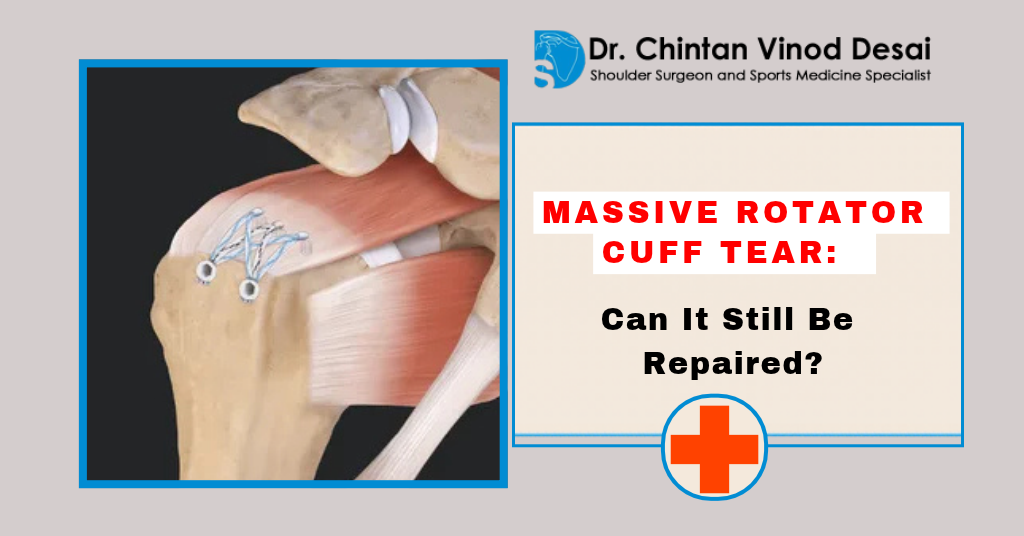
A massive rotator cuff tear can cause significant shoulder pain, weakness, and difficulty lifting the arm. Many patients worry that a large tear automatically means surgery is impossible or that shoulder function cannot be restored.
However, a massive rotator cuff tear may still be repairable in some patients. The treatment depends on the size and location of the tear, the condition of the tendon and muscles, the degree of tendon retraction, and whether arthritis or other shoulder damage is present.
Some tears can be repaired surgically, while others may require alternative procedures or non-surgical management.
Dr. Chintan Desai, a shoulder surgeon in Mumbai, evaluates the extent of rotator cuff damage to determine which treatment options may be appropriate for each patient.
What Is a Massive Rotator Cuff Tear?
The rotator cuff is a group of four muscles and their tendons that help stabilize the shoulder joint and control arm movements.
A massive rotator cuff tear generally refers to a tear involving at least two rotator cuff tendons or a tear measuring approximately 5 cm or more. The exact definition may vary depending on the clinical and imaging criteria used.
Massive tears can develop following an injury or gradually due to tendon degeneration over time.
Commonly affected tendons include:
- Supraspinatus
- Infraspinatus
- Subscapularis
When a large portion of the rotator cuff is damaged, patients may experience weakness, reduced shoulder movement, and difficulty performing everyday activities.
What Causes a Massive Rotator Cuff Tear?
Massive rotator cuff tears can develop due to several factors.
1. Age-Related Tendon Degeneration
Rotator cuff tendons can weaken over time. Gradual degeneration may increase the risk of tearing, sometimes even during routine activities.
2. Shoulder Injury
A fall, sudden pulling movement, or sports-related injury can cause a substantial tear, particularly when the tendon is already weakened.
3. Repetitive Overhead Activities
Repeated overhead movements at work or during sports can place ongoing stress on the rotator cuff.
4. Progression of an Existing Tear
A smaller tear may enlarge over time if the tendon continues to deteriorate or experiences further injury.
Early assessment can help determine the extent of tendon damage and whether treatment is needed to prevent further loss of shoulder function.
What Are the Symptoms of a Massive Rotator Cuff Tear?
Symptoms vary depending on the extent of the tear and whether it developed suddenly or gradually.
Common symptoms include:
- Persistent shoulder pain
- Weakness when lifting the arm
- Difficulty reaching overhead
- Pain that worsens at night
- Difficulty dressing or grooming
- Reduced shoulder movement
- Difficulty lifting or carrying objects
- Inability to raise the arm normally in severe cases
A massive tear does not always cause severe pain. Some patients experience substantial weakness even when pain is relatively mild.
If you suddenly lose the ability to raise your arm after an injury, seek prompt medical evaluation.
Can a Massive Rotator Cuff Tear Still Be Repaired?
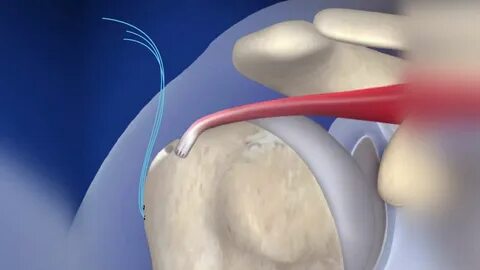
Yes, some massive rotator cuff tears can still be repaired. However, not every large tear is suitable for direct repair.
The most important consideration is whether the tendon can be mobilized and reattached to the bone without excessive tension and whether the tendon and muscle tissue have sufficient healing potential.
Your surgeon may assess the following factors.
1. Tendon Retraction
When a tendon tears, it may pull away from its original attachment and retract.
A tear with limited retraction may be easier to repair. If the tendon has retracted substantially, bringing it back to the bone can become more difficult.
2. Muscle Atrophy
Muscles attached to a chronically torn tendon may shrink over time.
Significant muscle atrophy can reduce the likelihood of a successful repair.
3. Fatty Infiltration
Fatty infiltration occurs when muscle tissue is gradually replaced by fat.
Advanced fatty infiltration can affect tendon healing and the functional results of surgery.
4. Duration of the Tear
An acute tear caused by a recent injury may have different treatment considerations from a chronic tear that has been present for several years.
Long-standing tears are more likely to have retraction, muscle changes, and reduced tissue quality.
5. Shoulder Arthritis
Some massive tears are associated with damage to the shoulder joint cartilage and changes in joint mechanics.
When significant arthritis is present, tendon repair alone may not adequately address the problem.
6. Patient Health and Activity Requirements
Age, general health, functional needs, activity level, and ability to complete rehabilitation also influence treatment decisions.
An MRI can provide important information, but the final decision requires clinical assessment alongside imaging findings.
How Is a Massive Rotator Cuff Tear Diagnosed?
Diagnosis usually involves a combination of medical history, physical examination, and imaging.
Clinical Examination
Your shoulder specialist may assess:
- Shoulder strength
- Active and passive range of motion
- Pain during movement
- Rotator cuff function
- Signs of shoulder instability or other associated problems
X-rays
X-rays help assess bone structure, joint space, and signs of shoulder arthritis. They may also reveal changes associated with chronic rotator cuff tears.
MRI Scan
An MRI can help identify:
- Number of tendons involved
- Size of the tear
- Degree of tendon retraction
- Muscle atrophy
- Fatty infiltration
- Associated shoulder abnormalities
These findings help determine whether the tear appears repairable and which treatment options should be considered.
Treatment Options for a Massive Rotator Cuff Tear
Treatment depends on the symptoms, functional limitations, tear characteristics, and overall condition of the shoulder.
1. Non-Surgical Treatment
Non-surgical management may be considered for selected patients, particularly when symptoms are manageable or surgery is unsuitable.
It may include:
- Activity modification
- Appropriate pain-relieving medication
- Physiotherapy
- Exercises to maintain shoulder movement
- Strengthening of the remaining functional shoulder muscles
Physiotherapy should be tailored to the tear. Not every exercise is suitable for every patient, particularly when there is substantial weakness.
Non-surgical treatment may improve pain and function, but it does not reattach a completely torn tendon to the bone.
2. Arthroscopic Rotator Cuff Repair
When the tear is repairable, the surgeon may perform arthroscopic rotator cuff repair.
This minimally invasive procedure uses a camera and specialized instruments inserted through small incisions.
The surgeon mobilizes the torn tendon and reattaches it to the upper arm bone using surgical anchors and sutures.
Potential benefits include:
- Repair of the damaged tendon
- Improvement in shoulder strength and function
- Reduction in pain in appropriately selected patients
- Treatment of associated shoulder problems when indicated
Healing depends on the quality of the tendon, tear characteristics, overall health, and adherence to rehabilitation.
3. Partial Rotator Cuff Repair
Some massive tears cannot be completely repaired, but part of the tendon may still be repairable.
In selected cases, a partial repair may help improve shoulder mechanics and function.
The expected benefit depends on the remaining tendon tissue, muscle function, and other shoulder conditions.
4. Superior Capsular Reconstruction or Tendon Transfer
For selected patients with irreparable tears, reconstructive procedures may be considered.
Superior capsular reconstruction uses a graft to help restore stability of the shoulder joint in appropriate cases.
Tendon transfer involves using another tendon to compensate for lost function when the original rotator cuff cannot be repaired.
These procedures are suitable only for specific patients, and their effectiveness depends on the pattern of the tear and the condition of the shoulder.
5. Reverse Shoulder Replacement
Reverse shoulder replacement may be considered for some patients with an irreparable massive rotator cuff tear, particularly when significant shoulder arthritis or substantial loss of shoulder function is present.
The procedure changes the mechanics of the shoulder joint so that the deltoid muscle can help raise the arm despite the damaged rotator cuff.
It is not necessary for every massive tear and requires careful assessment of the patient’s condition, functional goals, and suitability for joint replacement.
What Happens If a Massive Rotator Cuff Tear Cannot Be Repaired?
An irreparable tear does not mean that treatment options are exhausted.
Depending on the patient’s symptoms and shoulder condition, options may include:
- Physiotherapy and activity modification
- Pain management
- Partial rotator cuff repair
- Tendon transfer
- Superior capsular reconstruction
- Reverse shoulder replacement in selected cases
The appropriate treatment depends on whether the main problem is pain, weakness, loss of active movement, or associated arthritis.
The goal is to select a treatment that addresses the patient’s functional needs while considering the limitations and risks of each option.
Recovery After Massive Rotator Cuff Repair
Recovery after massive rotator cuff repair is generally longer than recovery after repair of a smaller tear because more tissue may need to heal.
The timeline varies according to the repair, tendon quality, and rehabilitation plan.
First 4–6 Weeks
The initial phase usually focuses on protecting the repair.
Patients may need to:
- Wear a sling as instructed
- Follow restrictions on shoulder movement
- Perform prescribed hand, wrist, and elbow exercises
- Manage pain and swelling
- Attend follow-up appointments
Passive shoulder movement may be introduced according to the surgeon’s protocol.
Weeks 6–12
Depending on healing and the repair technique, rehabilitation may gradually progress to:
- Improving shoulder range of motion
- Reducing stiffness
- Beginning selected active movements
- Restoring controlled shoulder function
Progression should be guided by the treating team.
Months 3–6
Rehabilitation may focus on:
- Gradual strengthening
- Improving shoulder control
- Restoring functional movement
- Progressing towards everyday activities
Heavy lifting and demanding overhead activities may remain restricted.
Six Months and Beyond
Some patients require six months or longer before returning to demanding activities. Recovery can take longer after a massive tear, and full strength may not return in every case.
Return to sports, heavy work, or overhead activities should depend on healing, strength, movement, and the surgeon’s assessment rather than a fixed timeline.
What Are the Risks of Massive Rotator Cuff Repair?
Like any surgery, rotator cuff repair carries potential risks, including:
- Infection
- Shoulder stiffness
- Nerve or blood vessel injury
- Persistent pain
- Incomplete tendon healing
- Re-tearing of the tendon
- Failure to regain expected strength or movement
Massive tears may have a greater risk of incomplete healing or re-tearing than smaller tears, particularly when tendon quality is poor or muscle degeneration is advanced.
Following post-operative restrictions and completing the prescribed rehabilitation program are important parts of recovery.
What Factors Affect the Success of Surgery?
The outcome of treatment depends on several factors, including:
- Size and location of the tear
- Tendon retraction
- Muscle atrophy and fatty infiltration
- Quality of the tendon tissue
- Presence of shoulder arthritis
- Patient health and activity requirements
- Surgical technique
- Adherence to rehabilitation
Surgery may reduce pain and improve function, but complete restoration of strength cannot be guaranteed.
A realistic treatment plan should consider both the potential benefits and the possibility of incomplete healing.
When Should You Consult a Shoulder Specialist?
Consider a specialist assessment if you have:
- Persistent shoulder pain
- Significant weakness when lifting your arm
- Difficulty performing everyday tasks
- Pain that disrupts sleep
- Symptoms following a shoulder injury
- Reduced shoulder movement
- Symptoms that continue despite physiotherapy
Prompt evaluation is particularly important when substantial weakness develops suddenly after an injury.
Early diagnosis can help establish the extent of the tear and identify treatment options before further tendon retraction or muscle degeneration develops.
Is Surgery Always Necessary for a Massive Rotator Cuff Tear?
No. Surgery is not necessary for every massive rotator cuff tear.
Some patients can manage their symptoms with physiotherapy, activity modification, and appropriate pain management. Others may benefit from surgery because of persistent pain, significant weakness, or loss of shoulder function.
The decision depends on the tear’s characteristics, functional limitations, overall health, and treatment goals.
Dr. Chintan Desai evaluates the clinical examination and imaging findings to determine whether direct repair, another surgical option, or non-surgical management may be appropriate.
Frequently Asked Questions About Massive Rotator Cuff Tears
Can a massive rotator cuff tear heal without surgery?
A completely torn tendon generally does not reattach to the bone on its own. However, selected patients may experience improved pain and function with physiotherapy and other non-surgical treatments.
Is every massive rotator cuff tear irreparable?
No. Some massive tears remain repairable. Repairability depends on tendon retraction, tissue quality, muscle condition, and associated shoulder damage.
How long does recovery take after massive rotator cuff repair?
Recovery often takes several months. Some patients need six months or longer to return to demanding activities, and recovery varies according to the tear and repair.
Can physiotherapy help an irreparable rotator cuff tear?
Yes. A supervised physiotherapy program may improve movement, strengthen the remaining functional muscles, and help manage symptoms. The program must be adapted to the individual’s shoulder function.
Will I regain full shoulder strength after surgery?
Not necessarily. Many factors influence recovery, including tendon quality, muscle degeneration, tear size, healing, and rehabilitation. The expected outcome should be discussed with your surgeon.
When is reverse shoulder replacement considered?
It may be considered for selected patients with irreparable rotator cuff tears, particularly when substantial loss of shoulder function or shoulder arthritis is present. It is not required for every massive tear.
Conclusion
A massive rotator cuff tear can cause considerable shoulder pain and weakness, but a large tear is not automatically irreparable. Some tears can be repaired, while others may benefit from partial repair, reconstructive procedures, physiotherapy, or reverse shoulder replacement in selected cases.
The most appropriate treatment depends on the condition of the tendon and muscles, the presence of arthritis, the patient’s functional needs, and the expected benefits and limitations of each option.
If shoulder pain or weakness is affecting your daily activities, consult Dr. Chintan Desai at Desai Shoulder Clinic` for a clinical evaluation and an individualized treatment plan.
