Shoulder pain is a common problem that can occur due to injuries, overuse, sports activities, or age-related changes. While many shoulder conditions improve with rest, physiotherapy, and medication, some injuries may require surgical treatment for long-term recovery.
Ignoring persistent shoulder problems can sometimes lead to worsening pain, reduced movement, muscle weakness, and difficulty performing daily activities.
The shoulder is a complex joint made up of muscles, tendons, ligaments, and cartilage that work together to provide stability and movement. Damage to these structures, such as rotator cuff tears, labral injuries, or shoulder instability, may require surgical intervention.
Dr. Chintan Desai, a leading shoulder specialist in Mumbai, explains the important signs that indicate when shoulder surgery may be needed and why timely evaluation is important.
Why Do Some Shoulder Conditions Require Surgery?
Not every shoulder problem needs surgery. Many conditions can improve with:
✔️ Physiotherapy
✔️ Activity modification
✔️ Medication
✔️ Strengthening exercises
However, surgery may be considered when there is:
- Significant tendon damage
- Repeated shoulder dislocations
- Severe instability
- Persistent pain despite treatment
- Loss of shoulder function
- Structural damage that cannot heal naturally
The goal of shoulder surgery is to repair damaged tissues, restore stability, reduce pain, and improve shoulder function.
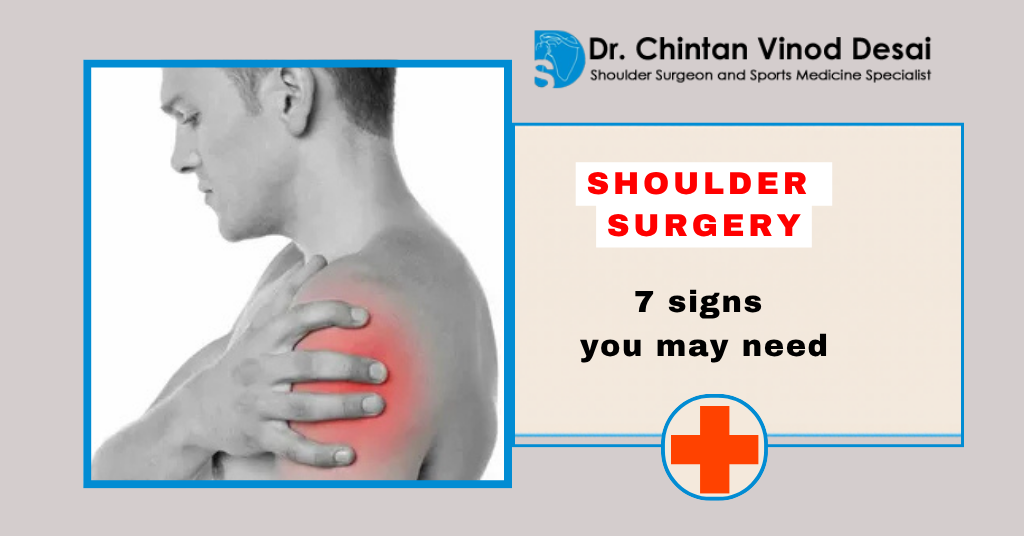
7 Signs You May Need Shoulder Surgery
1. Persistent Shoulder Pain Despite Treatment
One of the most common signs that surgery may be required is ongoing shoulder pain that does not improve with conservative treatment.
You may notice:
⚠️ Pain lasting for several months
⚠️ Pain despite physiotherapy or medications
⚠️ Difficulty sleeping due to shoulder pain
⚠️ Pain affecting daily activities
Persistent pain may indicate an underlying structural problem that needs further evaluation.
2. Difficulty Lifting or Moving Your Arm
If shoulder pain or weakness makes it difficult to raise your arm, it may indicate damage to important shoulder structures.
Common problems include:
- Rotator cuff tears
- Tendon injuries
- Shoulder impingement
- Joint damage
Difficulty performing activities like reaching overhead, dressing, or lifting objects should not be ignored.
3. Shoulder Weakness While Performing Activities
A healthy shoulder should allow normal strength and movement.
You may require specialist evaluation if you experience:
✔️ Weakness while lifting objects
✔️ Reduced arm strength
✔️ Difficulty performing workouts
✔️ Sudden loss of shoulder power
Significant weakness may occur due to tendon tears or muscle damage.
4. Repeated Shoulder Dislocations or Feeling of Instability
Shoulder instability occurs when the shoulder joint does not remain properly positioned.
Warning signs include:
⚠️ Feeling that the shoulder is slipping out
⚠️ Repeated dislocations
⚠️ Fear while moving the arm
⚠️ Weakness during physical activities
Repeated instability can damage the shoulder joint further and may require stabilization surgery.
5. Clicking, Locking, or Catching Sensation in the Shoulder
Unusual sounds or sensations during shoulder movement may indicate internal damage.
Possible causes include:
- Labral tears
- Cartilage injuries
- Shoulder instability
- Tendon problems
Consult a shoulder specialist if clicking is associated with:
✔️ Pain
✔️ Weakness
✔️ Loss of movement
✔️ Shoulder instability
6. A Confirmed Rotator Cuff or Labral Tear
Some shoulder injuries involve structural damage that may not heal completely without surgical repair.
Rotator Cuff Tear
The rotator cuff helps stabilize the shoulder and control arm movement.
Symptoms include:
✔️ Shoulder pain
✔️ Weakness while lifting
✔️ Night pain
✔️ Difficulty raising the arm
Large or complete tears may require arthroscopic repair.
Labral Tear
The labrum helps maintain shoulder stability.
Symptoms may include:
✔️ Deep shoulder pain
✔️ Clicking sensation
✔️ Shoulder instability
✔️ Reduced confidence during movement
Depending on severity, arthroscopic repair may be recommended.
7. Shoulder Pain Affecting Your Quality of Life
Shoulder problems may require surgery when they start affecting your daily routine.
You may notice difficulty with:
- Sleeping comfortably
- Working
- Exercising
- Playing sports
- Performing household activities
When shoulder pain limits your lifestyle despite treatment, surgical options may need to be considered.
How Are Shoulder Problems Evaluated Before Surgery?
Dr. Chintan Desai performs a detailed evaluation to understand the cause and severity of the shoulder problem.
1. Physical Examination
Assessment includes:
✔️ Shoulder movement evaluation
✔️ Strength testing
✔️ Joint stability assessment
✔️ Pain evaluation
2. Imaging Tests
X-Ray
Helps identify:
- Bone problems
- Arthritis changes
- Joint abnormalities
MRI Scan
Provides detailed images of:
- Rotator cuff tendons
- Labrum
- Ligaments
- Soft tissues
Ultrasound
May help evaluate tendon-related injuries.
Shoulder Surgery Options
The type of surgery depends on the condition and severity of damage.
Shoulder Arthroscopy
Shoulder arthroscopy is a minimally invasive procedure performed using a small camera and specialized instruments.
It can be used for:
✔️ Rotator cuff repair
✔️ Labral repair
✔️ Shoulder stabilization
✔️ Removal of damaged tissue
Benefits:
✅ Smaller incisions
✅ Less tissue damage
✅ Faster recovery
✅ Improved cosmetic results
Can Shoulder Surgery Be Avoided?
In some cases, surgery may not be required.
Non-surgical treatments may include:
Physiotherapy
Helps improve:
✔️ Shoulder strength
✔️ Flexibility
✔️ Movement patterns
✔️ Joint stability
Activity Modification
Reducing activities that worsen symptoms can allow healing.
Medications or Injections
May help control pain and inflammation in selected cases.
However, delaying necessary surgery for a repairable injury may sometimes reduce treatment success.
Prevention Tips to Protect Your Shoulder Health
You can reduce the risk of serious shoulder problems by:
Maintain Proper Exercise Technique
✔️ Avoid lifting excessive weights
✔️ Use controlled movements
✔️ Maintain correct posture
Strengthen Shoulder Muscles
Focus on:
✔️ Rotator cuff strengthening
✔️ Shoulder stability exercises
✔️ Upper back strengthening
Avoid Overtraining
Give your shoulder enough time to recover after intense workouts.
Treat Injuries Early
Early evaluation can prevent minor problems from becoming major injuries.
When Should You Consult a Shoulder Specialist?
Seek medical advice if you experience:
⚠️ Shoulder pain lasting more than a few weeks
⚠️ Weakness while lifting
⚠️ Difficulty moving the arm
⚠️ Repeated shoulder dislocations
⚠️ Clicking with pain
⚠️ Failed improvement with physiotherapy
⚠️ Shoulder pain affecting daily activities
Early diagnosis helps determine the right treatment approach.
Why Choose Dr. Chintan Desai for Shoulder Surgery?
Dr. Chintan Desai is an experienced shoulder surgeon in Mumbai specializing in advanced diagnosis and treatment of shoulder conditions.
His expertise includes:
✔️ Shoulder arthroscopy
✔️ Rotator cuff repair
✔️ Labral tear treatment
✔️ Shoulder instability surgery
✔️ Sports-related shoulder injuries
✔️ Shoulder rehabilitation
With advanced techniques and a patient-focused approach, he helps patients regain shoulder strength, mobility, and confidence.
Conclusion
Shoulder pain does not always require surgery, but certain warning signs should not be ignored. Persistent pain, weakness, repeated instability, and confirmed shoulder damage may indicate the need for surgical treatment.
Early evaluation by a shoulder specialist can help identify the problem and provide the most suitable treatment option.
Consult Dr. Chintan Desai for expert evaluation and personalized treatment guidance for shoulder injuries and conditions requiring surgery.