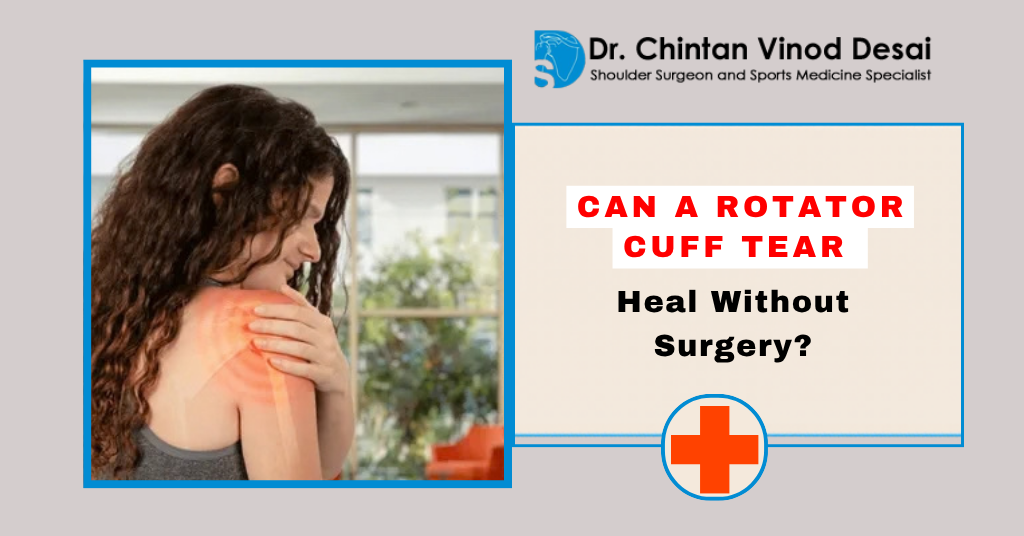
A rotator cuff tear can make simple activities like lifting your arm, wearing clothes, reaching overhead, or sleeping on your side painful. Many people diagnosed with a rotator cuff tear wonder:
“Will it heal on its own?”
“Do I need surgery?”
The answer depends on several factors, including the size of the tear, the cause of injury, your age, activity level, and how much the shoulder is affecting your daily life.
Not every rotator cuff tear requires surgery. Many patients improve with proper non-surgical treatment, while some tears may need surgical repair to restore shoulder function.

What Is a Rotator Cuff Tear?
The rotator cuff is a group of four muscles and tendons that help:
- Lift your arm
- Rotate your shoulder
- Maintain shoulder stability
A tear occurs when one or more of these tendons become damaged.
Rotator cuff tears can happen due to:
- Sports injuries
- Falls or accidents
- Repetitive overhead activities
- Heavy lifting
- Age-related tendon weakening
Can a Rotator Cuff Tear Heal Without Surgery?
It depends on the type and severity of the tear.
Small or Partial Tears
Small tears or partial tendon injuries may improve with:
- Rest and activity modification
- Physiotherapy
- Strengthening exercises
- Pain management
- Anti-inflammatory medicines when advised
The goal of treatment is to reduce pain, improve shoulder movement, and strengthen the surrounding muscles.
Complete Rotator Cuff Tears
A complete tear means the tendon has separated from its attachment.
Some patients can manage symptoms without surgery, especially if:
- Pain is controlled
- Shoulder function is acceptable
- Daily activities are not significantly affected
However, larger tears may continue to cause weakness and may worsen over time.
A shoulder specialist can evaluate whether conservative treatment is suitable or whether repair should be considered.
What Happens If a Rotator Cuff Tear Is Left Untreated?
Ignoring a rotator cuff tear may lead to:
- Increasing shoulder pain
- Reduced arm strength
- Difficulty performing daily activities
- Loss of shoulder movement
- Progression of tendon damage
Early evaluation helps understand the condition and choose the right treatment approach.
Non-Surgical Treatment Options for Rotator Cuff Tears
Many patients start with conservative treatment.
1. Physiotherapy
A structured rehabilitation program helps improve:
- Shoulder flexibility
- Muscle strength
- Joint movement
- Shoulder stability
Exercises are customised based on the severity of the tear and symptoms.
2. Activity Modification
Avoiding movements that increase pain can help reduce stress on the injured tendon.
Your doctor may suggest modifying:
- Overhead activities
- Heavy lifting
- Repetitive shoulder movements
3. Medicines and Injections
Pain-relieving medicines or injections may be recommended in selected cases to reduce inflammation and discomfort.
These treatments should be used under medical guidance.
When Is Surgery Considered for a Rotator Cuff Tear?
Surgery may be recommended when:
- Pain continues despite proper non-surgical treatment
- Shoulder weakness affects daily activities
- There is a large or complete tear
- The injury happened suddenly after trauma
- The patient needs strong shoulder function for work or sports
Rotator cuff repair is commonly performed through minimally invasive techniques such as shoulder arthroscopy.
How Is a Rotator Cuff Tear Diagnosed?
A shoulder specialist may perform:
Physical Examination
The doctor evaluates:
- Shoulder movement
- Muscle strength
- Pain patterns
- Stability of the joint
Imaging Tests
Tests may include:
- X-ray
- MRI scan
- Ultrasound
MRI helps assess tendon damage and the extent of the tear.
How Long Does It Take to Recover From a Rotator Cuff Tear?
Recovery depends on:
- Size of the tear
- Treatment approach
- Age
- Overall health
- Rehabilitation progress
Patients treated without surgery may improve over weeks to months with consistent physiotherapy.
Recovery after surgery usually requires a longer rehabilitation period focused on protecting the repair and gradually restoring movement and strength.
When Should You See a Shoulder Specialist?
You should consult a shoulder specialist if you experience:
- Shoulder pain lasting several weeks
- Difficulty lifting your arm
- Weakness while using your shoulder
- Pain that affects sleep
- Shoulder pain after a fall or injury
- Reduced range of motion
- Symptoms not improving with physiotherapy
A proper diagnosis helps determine whether you need continued non-surgical care or other treatment options.
Frequently Asked Questions About Rotator Cuff Tears
Can a rotator cuff tear repair itself naturally?
Small or partial tears may improve with treatment and rehabilitation. However, a completely torn tendon usually does not reconnect on its own.
Does every rotator cuff tear need surgery?
No. Many patients improve with non-surgical treatment. Surgery depends on the tear type, symptoms, activity level, and shoulder function.
Can physiotherapy fix a rotator cuff tear?
Physiotherapy cannot reconnect a completely torn tendon, but it can improve shoulder strength, movement, and reduce symptoms in many patients.
How do I know if my rotator cuff tear is getting worse?
Increasing pain, worsening weakness, difficulty lifting your arm, and reduced shoulder movement may indicate progression and should be evaluated.
Can I exercise with a rotator cuff tear?
Exercise may be helpful, but it should be guided by a physiotherapist or specialist to avoid worsening the injury.
Conclusion
A rotator cuff tear does not always mean surgery is required. Many patients achieve pain relief and improved shoulder function with the right combination of physiotherapy, activity modification, and medical guidance.
However, some tears require surgical treatment, especially when there is significant weakness, persistent pain, or loss of shoulder function.
If shoulder pain is affecting your sleep, work, or daily activities, consulting a shoulder specialist can help identify the cause and guide you towards the most suitable treatment option.