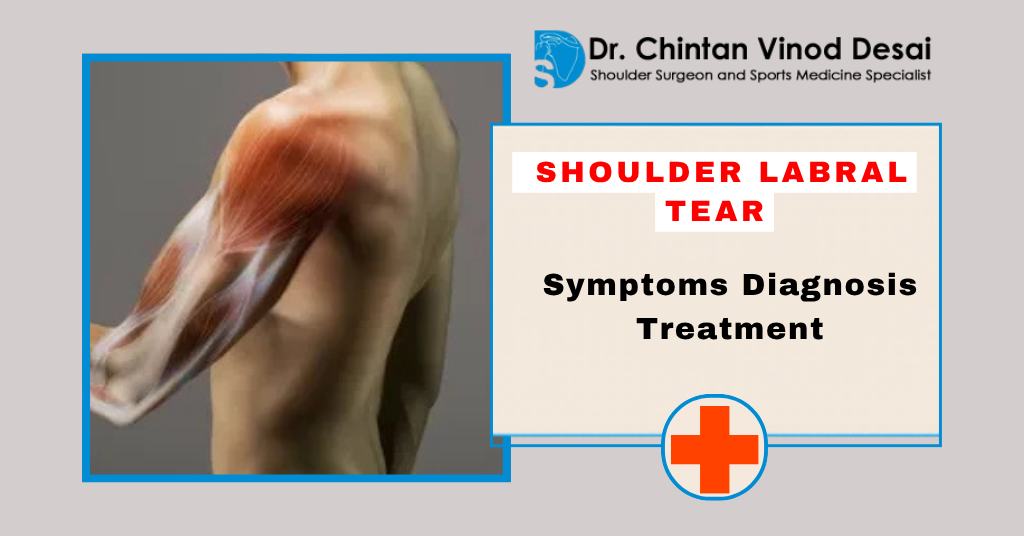
Shoulder pain, weakness, and a feeling of instability can significantly affect your ability to perform everyday activities. One of the common causes of these symptoms is a shoulder labral tear — an injury that affects the cartilage responsible for stabilizing the shoulder joint.
A labral tear can occur due to sports injuries, falls, repetitive overhead movements, or shoulder dislocations. If left untreated, it may lead to persistent pain, reduced shoulder function, and repeated instability.
Dr. Chintan Desai, a leading shoulder specialist in Mumbai, explains everything you need to know about shoulder labral tears, including their causes, symptoms, diagnosis, treatment options, and recovery process.
What is a Shoulder Labral Tear?
The shoulder joint is a ball-and-socket joint that allows a wide range of movement. The labrum is a ring of strong cartilage surrounding the shoulder socket (glenoid).

The labrum helps to:
✔️ Stabilize the shoulder joint
✔️ Keep the upper arm bone securely positioned
✔️ Improve joint movement and function
When the labrum becomes torn due to injury or repeated stress, it is known as a shoulder labral tear.
Types of Shoulder Labral Tears
There are different types of labral tears depending on the location and cause of the injury.

1. SLAP Tear (Superior Labrum Anterior to Posterior)
A SLAP tear affects the upper part of the labrum where the biceps tendon attaches.
It commonly occurs due to:
- Sports involving overhead movements
- Heavy lifting
- Falling on an outstretched arm
- Repetitive shoulder motion
Commonly affected individuals include athletes, swimmers, and throwing sports players.
2. Bankart Tear
A Bankart tear occurs when the lower portion of the labrum is damaged, usually after a shoulder dislocation.
It can cause:
✔️ Shoulder instability
✔️ Repeated dislocations
✔️ Feeling that the shoulder may “slip out”
This condition is commonly seen in younger and active individuals.
3. Posterior Labral Tear
A posterior labral tear affects the back portion of the labrum.
It may occur due to:
- Sports injuries
- Heavy weightlifting
- Direct impact to the shoulder
Causes of Shoulder Labral Tears
A shoulder labral tear can develop due to several reasons:
1. Shoulder Injury or Trauma
A sudden injury can damage the labrum, such as:
- Falling on an extended arm
- Direct impact to the shoulder
- Shoulder dislocation
- Sports-related accidents
2. Repetitive Shoulder Movements
Repeated overhead activities can gradually wear down the labrum.
Common examples include:
🏏 Cricket
🏊 Swimming
🎾 Tennis
🏋️ Weightlifting
3. Age-Related Changes
As people age, the labrum may become weaker and more prone to injury due to natural wear and tear.
Symptoms of Shoulder Labral Tear
The symptoms of a labral tear can vary depending on the severity and location of the injury.
Common symptoms include:
⚠️ Deep shoulder pain
⚠️ Clicking or popping sensation
⚠️ Shoulder weakness
⚠️ Reduced range of motion
⚠️ Feeling of instability
⚠️ Pain during overhead activities
⚠️ Difficulty sleeping on the affected shoulder
Some patients describe a feeling that the shoulder is catching or locking during movement.
When Should You Consult a Shoulder Specialist?
You should consult a shoulder specialist if you experience:
✔️ Persistent shoulder pain after an injury
✔️ Repeated shoulder dislocations
✔️ Clicking sounds with pain
✔️ Difficulty lifting your arm
✔️ Shoulder weakness affecting daily activities
✔️ Pain that does not improve with rest or physiotherapy
Early diagnosis can prevent further damage and improve treatment outcomes.
How is a Shoulder Labral Tear Diagnosed?
Accurate diagnosis is important because symptoms of a labral tear can resemble other shoulder problems.
Dr. Chintan Desai may recommend:
1. Physical Examination
The shoulder specialist evaluates:
- Shoulder movement
- Strength
- Stability
- Pain patterns
Special clinical tests help identify possible labral injuries.
2. Imaging Tests
MRI Scan
An MRI helps visualize soft tissues, including the labrum, tendons, and ligaments.
MR Arthrogram
In some cases, a contrast-enhanced MRI may provide better visibility of small labral tears.
X-Ray
X-rays may be performed to rule out fractures or bone-related problems.
Treatment Options for Shoulder Labral Tear
Treatment depends on:
✔️ Type and size of the tear
✔️ Patient’s age and activity level
✔️ Shoulder stability
✔️ Severity of symptoms
Non-Surgical Treatment
Many minor labral tears can improve with conservative treatment.
Options may include:
1. Rest and Activity Modification
Avoiding activities that worsen symptoms allows the shoulder to heal.
2. Physical Therapy
A structured rehabilitation program helps improve:
✔️ Shoulder strength
✔️ Joint stability
✔️ Range of motion
✔️ Muscle control
3. Medications or Injections
Pain-relieving medications or targeted injections may be recommended in selected cases to reduce inflammation and discomfort.
Surgical Treatment for Shoulder Labral Tear
If symptoms continue despite non-surgical treatment, surgery may be recommended.
Shoulder Arthroscopy for Labral Repair
Shoulder arthroscopy is a minimally invasive procedure where a small camera and specialized instruments are used to repair the damaged labrum.
During surgery, the surgeon may:
✔️ Remove damaged tissue
✔️ Reattach the torn labrum
✔️ Repair associated injuries
✔️ Stabilize the shoulder joint
Benefits of arthroscopic labral repair include:
✅ Small incisions
✅ Less tissue damage
✅ Faster recovery compared to open surgery
✅ Improved shoulder stability
Recovery After Shoulder Labral Tear Surgery
Recovery depends on the extent of the injury and the type of repair performed.
Initial Recovery Phase
After surgery:
- A shoulder sling may be required
- Pain management will be provided
- Gentle movements may begin under guidance
Physical Therapy
Physiotherapy plays a crucial role in recovery.
It focuses on:
✔️ Restoring shoulder movement
✔️ Improving strength
✔️ Preventing stiffness
✔️ Returning to normal activities
Recovery Timeline
- Daily activities: Around 6–12 weeks
- Strength improvement: 3–6 months
- Complete recovery: Usually 6 months or more depending on the injury and rehabilitation
Athletes may require additional time before returning to competitive sports.
Risks of Shoulder Labral Tear Surgery
Like any surgical procedure, arthroscopic labral repair has potential risks, including:
- Infection
- Shoulder stiffness
- Nerve or blood vessel injury
- Persistent pain
- Recurrence of instability
Following rehabilitation instructions helps reduce complications and improves recovery.
Is Surgery Always Needed for a Shoulder Labral Tear?
Not every labral tear requires surgery.
Surgery may be considered when:
✔️ Pain continues despite physiotherapy
✔️ The shoulder repeatedly dislocates
✔️ There is significant instability
✔️ The tear affects daily activities or sports performance
A shoulder specialist can determine the best treatment approach after a detailed evaluation.
Why Choose Dr. Chintan Desai for Shoulder Labral Tear Treatment?
Dr. Chintan Desai is an experienced shoulder surgeon in Mumbai specializing in advanced diagnosis and treatment of shoulder conditions.
His expertise includes:
✔️ Shoulder arthroscopy
✔️ Labral tear repair
✔️ Rotator cuff surgery
✔️ Shoulder instability treatment
✔️ Sports-related shoulder injuries
✔️ Shoulder rehabilitation
With a patient-focused approach and advanced surgical techniques, he helps patients regain shoulder strength, stability, and function.
Conclusion
A shoulder labral tear can cause persistent pain, weakness, and instability if not properly diagnosed and treated. Understanding the symptoms and seeking timely evaluation from a shoulder specialist can help prevent further damage.
Whether managed with physiotherapy or minimally invasive arthroscopic surgery, the right treatment approach can help restore shoulder movement and improve quality of life.
Consult Dr. Chintan Desai for expert evaluation and personalized treatment for shoulder labral tears.